
Freight Shipping in the United States: Understanding Your Shipping Options
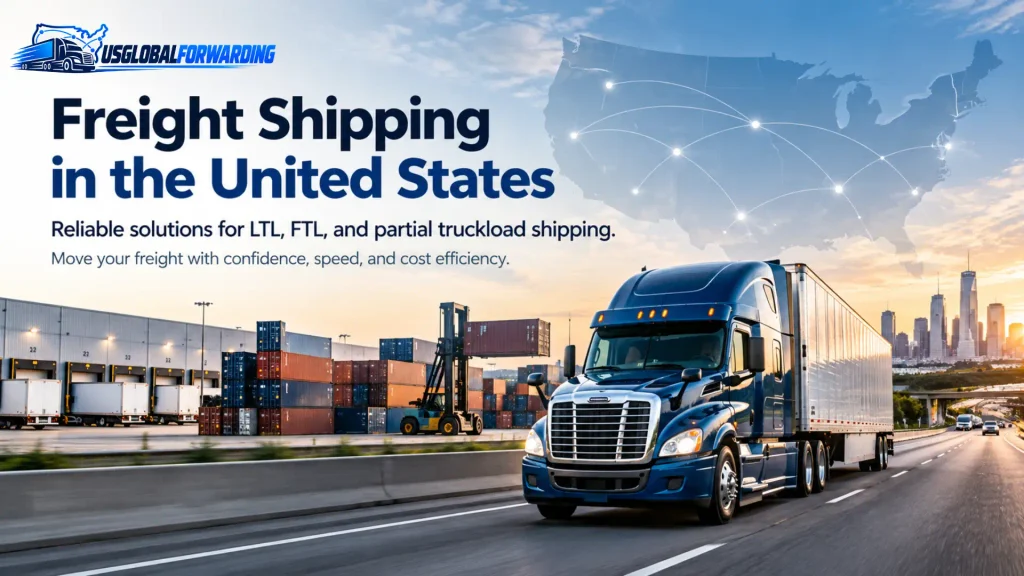
Freight transportation is a central part of the U.S. economy. Manufacturers, distributors, retailers, wholesalers, construction companies, and many other businesses depend on freight networks to move raw materials, equipment, components, and finished goods between suppliers, warehouses, production facilities, stores, and customers. In 2024, the U.S. freight transportation system handled approximately 20 billion tons of goods with a total value of about $25 trillion. Truck transportation remains particularly important because it connects businesses directly with locations that may not have access to rail, ports, or other transportation infrastructure.
Choosing a freight service involves more than finding a truck. Shipment size, total weight, dimensions, commodity characteristics, pickup and delivery locations, handling requirements, transit expectations, and available equipment can all affect how freight should be transported. Understanding these factors helps shippers provide more accurate shipment information, compare appropriate transportation options, and reduce avoidable problems during pickup or delivery. For domestic road freight, three commonly discussed options are less-than-truckload shipping, full truckload shipping, and partial truckload shipping.
How Freight Shipping Works
Freight shipping begins with accurate information about what is being transported and where it needs to go. A shipment may consist of a single pallet, several pallets, crates, machinery, packaged commercial products, or other freight suitable for commercial transportation. Before transportation can be arranged, shippers generally need to identify the origin and destination, number of handling units, total shipment weight, dimensions, commodity description, and any special pickup or delivery requirements. These details allow the shipment to be matched with an appropriate transportation method and equipment type. Once freight is accepted for transportation, the shipment moves through either a direct truckload operation or a network that may involve terminals, consolidation, transfers, and final delivery, depending on the service selected.
What Determines a Freight Shipping Quote?
Freight rates are influenced by multiple variables rather than distance alone. The origin and destination determine the transportation lane, while shipment weight and dimensions affect the amount of trailer space and carrying capacity required. The type of commodity can also matter because some freight requires different handling, equipment, liability considerations, or classification. For LTL shipments, freight classification and density may be relevant to rating. Pickup and delivery conditions can also change the final cost. Examples include residential locations, locations without loading docks, limited-access facilities, liftgate requirements, scheduled delivery appointments, and other services outside a standard dock-to-dock shipment. Providing complete information at the quotation stage helps reduce the likelihood of adjustments after the freight has been inspected, weighed, measured, or delivered.
Choosing the Right Trucking Service for Your Shipment
There is no single trucking service that is appropriate for every shipment. A small palletized shipment may not require an entire trailer, while a large shipment may benefit from dedicated truck capacity. Other loads fall between those situations. Shippers therefore need to consider how much trailer space their freight occupies, whether the shipment can be transferred between terminals, how sensitive the goods are to repeated handling, the required delivery schedule, and the amount of capacity needed. LTL, full truckload, and partial truckload services address different combinations of these requirements.
Less-Than-Truckload (LTL) Freight Shipping
Less-than-truckload shipping is designed for freight that does not require the full capacity of a trailer. Multiple shipments from different customers can share trailer space, with each shipper paying for the portion of transportation capacity associated with its freight. LTL networks commonly use terminals to consolidate shipments moving in similar directions and redistribute them as they move toward their destinations. Because freight may be transferred during transit, proper packaging and secure palletization are important. LTL can be practical for palletized commercial freight, recurring shipments between businesses, inventory replenishment, and other loads that are larger than parcel shipments but do not require an entire truck.
Full Truckload (FTL) Freight Shipping
Full truckload shipping generally uses dedicated trailer capacity for a shipment rather than combining the load with unrelated LTL freight. The truck typically travels from the pickup location toward the delivery destination without the terminal transfers normally associated with an LTL network. A full truckload does not necessarily mean that every available cubic foot of a trailer must be occupied. Shippers may choose truckload service because of shipment size, weight, operational requirements, loading configuration, delivery schedule, or a preference to reduce intermediate freight handling. Equipment requirements vary according to the cargo, with common road-freight configurations including dry vans, refrigerated trailers, flatbeds, and specialized equipment.
Partial Truckload Freight Shipping
Partial truckload transportation generally refers to shipments that occupy more space than a typical LTL shipment but do not require an entire trailer. Freight from more than one shipper may travel on the same truck, while the operating model can involve fewer transfers than a traditional LTL network. The exact meaning and availability of partial truckload service can vary among transportation providers, so shipment characteristics should be reviewed carefully before selecting it. It can be relevant for multi-pallet shipments where trailer space, handling frequency, transit requirements, and pricing need to be considered together rather than choosing strictly between traditional LTL and dedicated truckload service.
Preparing Freight for Pickup, Transit, and Delivery
Accurate preparation can make freight transportation more predictable regardless of the service used. Shippers should confirm the actual weight and dimensions of the packaged shipment rather than relying only on product dimensions. Pallets, crates, protective materials, and other packaging add both weight and size. Freight should be secured so that it can withstand normal transportation conditions, and labels and shipment documentation should clearly correspond with the cargo being tendered. Pickup and delivery locations should also be reviewed in advance for loading docks, forklifts, operating hours, appointment requirements, access restrictions, and equipment needs. When shipment information accurately reflects the freight and the facilities involved, it becomes easier to select an appropriate transportation method, obtain a meaningful quote, and reduce unexpected changes during the shipping process.